
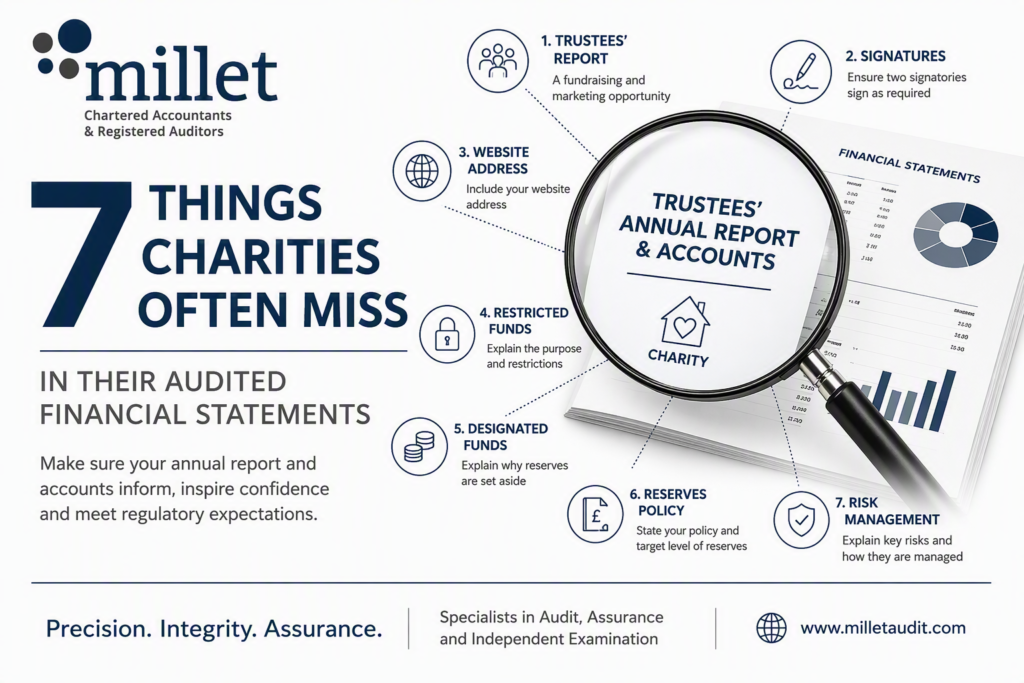
7 things Charities often miss: For many charities, the annual report and financial statements are viewed as a compliance exercise. The audit is completed, the accounts are signed and filed, and everyone moves on. However, this approach can mean missed opportunities and, in some cases, missed regulatory requirements.
At Millet Audit, we review hundreds of charity accounts and trustees’ reports. The same issues appear time and time again. Here are seven areas that trustees should pay particular attention to before approving their annual report and financial statements.
- Treat the Trustees’ Report as a Marketing Opportunity
One of the biggest mistakes charities make is treating the trustees’ report as a regulatory document rather than a fundraising tool.
The Charity Commission specifically notes that the trustees’ annual report helps potential funders, donors and beneficiaries understand what the charity does and the impact it achieves.
Many reports contain only the bare minimum. Instead, consider:
- Including case studies and success stories.
- Demonstrating the measurable impact of projects.
- Clearly explaining future plans and ambitions.
- Highlighting volunteer contributions.
- Showcasing partnerships and achievements.
Remember that potential donors, grant funders and corporate sponsors often review published accounts before deciding whether to support a charity. Your trustees’ report may be the first impression they receive.
For guidance on preparing an effective trustees’ report, see the Charity Commission guidance on Trustees’ Annual Reports.
- Ensure the Accounts Are Signed Correctly – Charity Audit
A surprising number of charities overlook the signing requirements.
The Charity Commission has increasingly emphasised the importance of proper approval and execution of annual reports and accounts. Many governing documents require more than one trustee to sign, and best practice for incorporated charities is often for two trustees to sign on behalf of the board.
Before filing your accounts:
- Check your constitution, articles or trust deed.
- Ensure board approval is properly documented in the minutes.
- Confirm that the trustees’ report and balance sheet have been signed in accordance with the governing document.
Failure to comply can lead to avoidable questions from regulators, auditors and funders.
- Include the Charity’s Website Address
This is one of the easiest disclosures to miss.
The Charity SORP disclosure requirements and associated Charity Commission expectations include disclosure of the charity’s website address within the reference and administrative information section of the trustees’ report. This is specifically highlighted in charity reporting checklists and current reporting guidance.
A website address may seem a minor point, but it helps users access further information about the charity’s activities, governance and impact.
If you have invested in a good website, make sure your annual report points readers towards it.
- Clearly Explain Restricted and Designated Funds
Many charities disclose their fund balances but fail to explain them properly.
Readers should easily understand:
- What each restricted fund relates to.
- Any restrictions imposed by donors or grant providers.
- Why designated funds have been established.
- When trustees expect those funds to be spent.
The Charity SORP places significant importance on explaining the nature and purpose of funds. Restricted funds are legally restricted by donors, whereas designated funds remain unrestricted but are earmarked by trustees for a specific purpose.
A clear explanation demonstrates good stewardship and reassures donors that funds are being used appropriately.
- Include a Meaningful Reserves Policy
Many reserves policies are generic and provide little useful information.
Statements such as “the charity aims to maintain sufficient reserves” do not help readers understand the charity’s financial position.
Trustees should explain:
- Why reserves are needed.
- The level of reserves held.
- The target reserve level.
- Any plans to increase or reduce reserves.
The Charity Commission’s guidance on reserves encourages charities to explain their policy in a manner that stakeholders can understand.
- Demonstrate Public Benefit
Every charity exists for public benefit, but many reports do not adequately explain how this benefit has been delivered during the year.
Rather than simply stating that trustees have considered public benefit guidance, explain:
- Who benefited.
- How they benefited.
- The difference the charity made.
- Evidence of outcomes achieved.
The most effective reports tell a story that links activities, outcomes and impact.
- Explain Key Risks and How They Are Managed
Trustees frequently underestimate the value of a robust risk section.
Funders and regulators increasingly want assurance that trustees understand the risks facing the organisation.
Common risks include:
- Loss of grant funding.
- Cyber security threats.
- Dependence on key personnel.
- Safeguarding concerns.
- Regulatory compliance.
A strong risk section demonstrates effective governance and helps build confidence among supporters and funders.
Final Thoughts
Annual accounts should do more than satisfy regulatory requirements. They should demonstrate accountability, build confidence and help attract future funding.
A well-prepared set of financial statements can become one of a charity’s most powerful fundraising and governance tools.
If you would like assistance with your charity’s audit, independent examination, trustees’ report or financial statements, Millet Audit would be delighted to help.
Millet Audit Ltd
Beyond Aldgate Tower
2 Leman Street
London E1 8FA
☎ 0203 084 4550
🌐 https://www.milletaudit.com
Further guidance can also be found at:
- Charity Commission: Prepare a Trustees’ Annual Report
- Charity Commission: Charity Reserves (CC19)
- https://www.charitysorp.org
Millet Audit exclusively specialises in audit, assurance and independent examination services, helping charities strengthen governance, comply with regulatory requirements and present their impact effectively to donors, funders and stakeholders.